Independent study / 2026
Birds, feathers and movement.
All workExploring what makes a bird recognisable, from the first silhouette to small differences in its plumage.
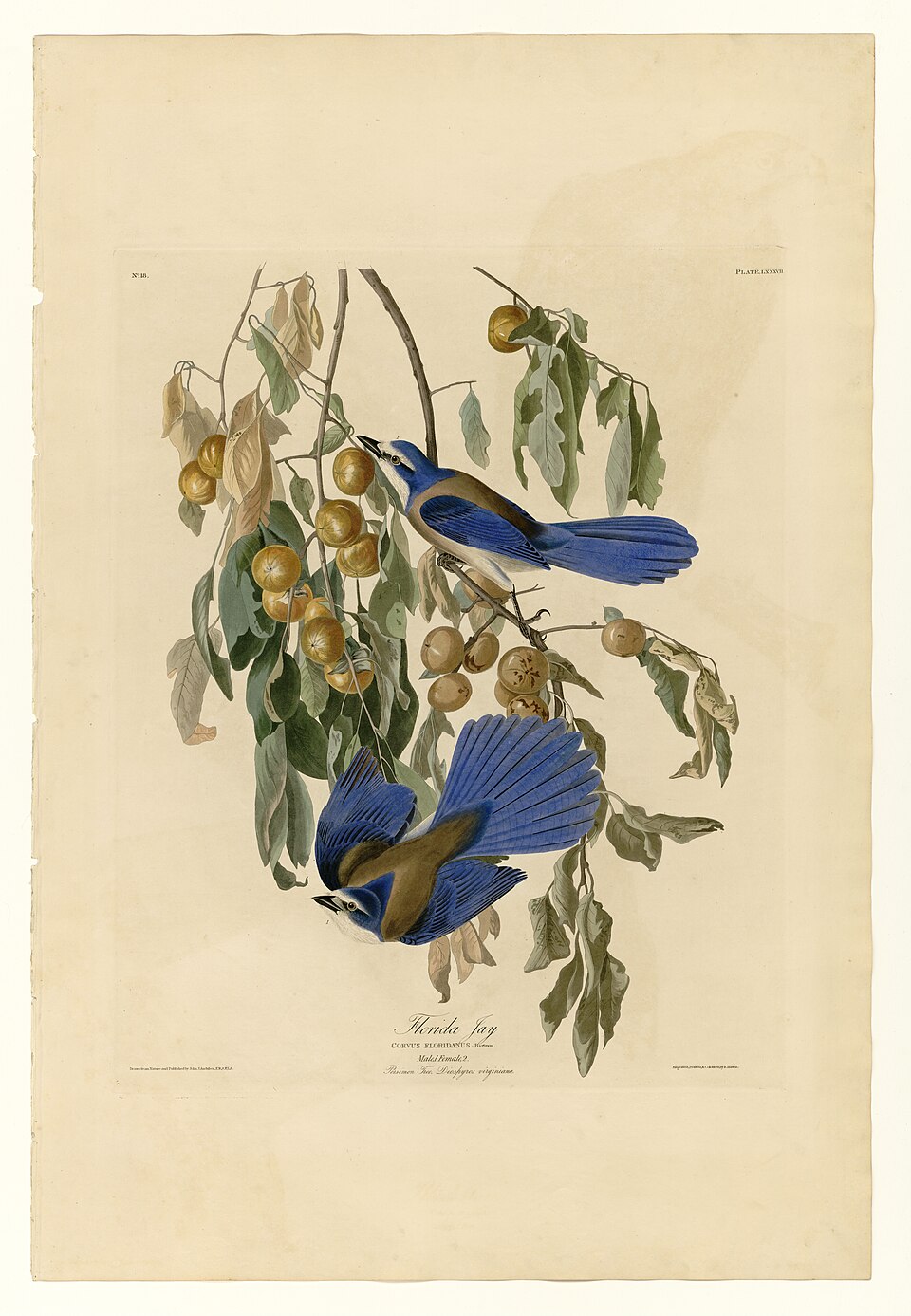
What makes a bird recognisable?
I wanted to explore how few details it takes to make a bird recognisable. The project began with silhouettes and grew into a study of wings, colours and balance. Historical natural history plates offer a useful starting point for comparing form. I use them as references and look for what I can simplify without losing the bird's character.
- Project
- Independent study
- Period
- Spring 2026
- Focus
- Silhouette, feathers and colour
- My work
- Observation and visual analysis
Closer to the subject
A selection of references and observations from the process.
Silhouette first
The wing's shape and the relationship between body, head and tail are my starting point before I move on to colour.
Reference plate: John James Audubon, Florida Jay.
What I write in the margins
I note colours, movements and questions beside the sketches. The words help me remember what the drawing doesn't show.
Illustrative photograph of a fountain pen and notebook. Photo: Unsplash.
How I work
Three steps I return to throughout a project.
Look for the whole
I start with a small sketch of the movement. Capturing its direction matters more here than drawing every feather.
Examine what stands out
I compare beaks, wings and tails across several references and note what I need to examine more closely.
Simplify and assess
Finally, I remove details that interrupt the silhouette and consider whether the bird's character is still clear.